Friday, January 7, 2011

January 7, 1782

1st U.S. commercial bank, Bank of North America, opens in Philadelphia


Thursday, January 6, 2011

January 6, 1540

King Henry VIII of England was married to Anne of Cleves, his fourth wife

Anne of Cleves

Wednesday, January 5, 2011

Tuesday, January 4, 2011

January 4, 1958

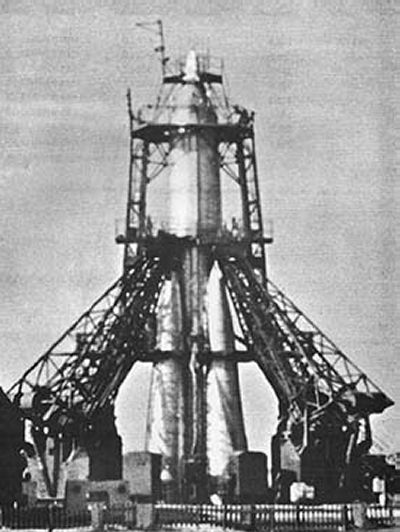
The Soviet satellite Sputknik I fell to the earth from its orbit.
The craft had been launched on October 4, 1957

With Sputnik I, The Soviet Union beat the United States to sending the first artificial satellite into Earth's orbit, sparking the great Space Race.

Also:
Utah became the 45th U.S. State in 1896. Congrats, Utah.
In Dubai, United Arab Emirates, the Burj Dubai (Dubai Tower) opened as the world's tallest tower at 2,625 feet last year.
In 2006, Nancy Pelosi became the first women to be Speaker of the U.S. House of Representatives.

Monday, January 3, 2011

January 3, 1521

Pope Leo X excommunicated Martin Luther at the Diet of Worms.

Sunday, January 2, 2011

January 2, 1893


Chicago World's Fair, 1893

Image, Source: digital file from intermediary roll film copy
On January 2, 1893, Frederick Douglass delivered an address at the dedication of the Haitian Pavilion at the World's Columbian Exposition located in Jackson Park in Chicago. Douglass, a prominent writer, abolitionist, and publisher of the North Star, spent the years 1889 to 1891 in Haiti serving the Benjamin Harrison Administration as United States minister and general consul.

In his speech, Douglass discussed the character and history of Haiti, its evolution from slave colony to free and independent republic, and its relevance to African Americans. He expressed optimism about the country's future despite its numerous problems. Douglass used the occasion to speak of the commercial potential and historical importance of Haiti and to argue for improved relations between Haiti and the United States. "It is a land strikingly beautiful," Douglass explained, "diversified by mountains, valleys, lakes, rivers and plains, and contains in itself all the elements of great and enduring wealth."

Saturday, January 1, 2011

January 1, 1892

On January 1, 1892, a fifteen-year old Irish girl named Annie Moore became the first of the more than twelve million immigrants who would pass through the doors of the Ellis Island Immigration Station in its sixty-two years of operation. This small island off the New Jersey coast in the New York Harbor lies in the shadow of the Statue of Liberty. Together, these two landmarks have welcomed millions of immigrants to America.
 
 A Statue of Annie Moore

Fred Astaire's father, Fritz Austerlitz, was another 1892 arrival. A few other famous Ellis Island immigrants who arrived during this era include Harry Houdini in 1914, Walter Elias Disney (Walt Disney) in 1919 Albert Einstein in 1921, F. Scott Fitzgerald in 1921 and George Gershwin in 1921.